| Loquat Pests | |||||||
|---|---|---|---|---|---|---|---|
| Back to Loquat Page 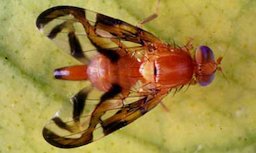 Fig. 1 Adult female Caribbean fruit fly, Anastrepha suspensa (Loew) |
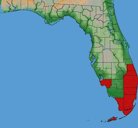
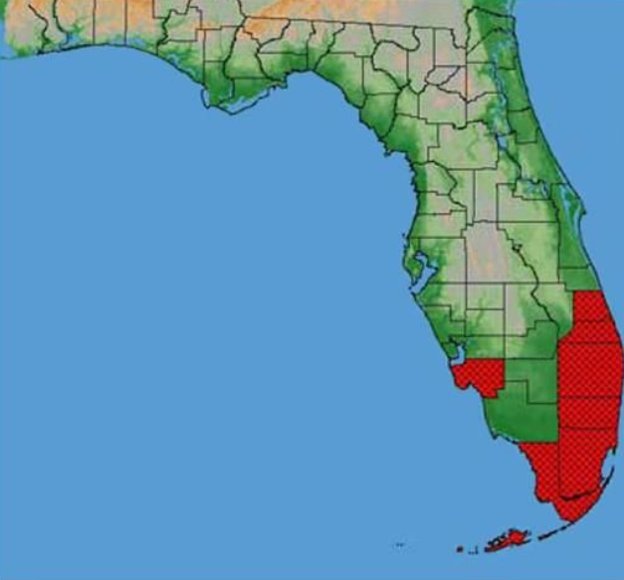
Loquat fruit are attacked by the Caribbean fruit fly (Anastrepha suspensa) and some caterpillars. Protect fruit from the Caribbean fruit fly by paper bagging the entire fruiting panicle. 1 Leaf and stem pests include various scales, aphids, beetles, weevils, caterpillars, and nematodes. Please contact your county extension agent for current control recommendations for loquat pest. 1 Caribbean Fruit Fly Anastrepha suspensa Since 1965, however, a new introduction of the pest into Florida has continued to spread and it now occurs in most of southern peninsular Florida, commonly north to Citrus and Volusia Counties, with isolated records north to Jacksonville (Ibrahim, 1980). Within the first three months following the discovery of A. suspensa in Florida in 1965, more than 14,000 adults were trapped in Dade County and identified by state entomologists. It has now developed into a major fruit fly problem for citrus and several other crops in Florida. 2
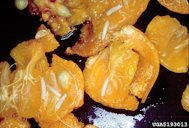
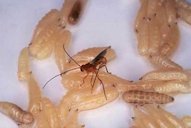
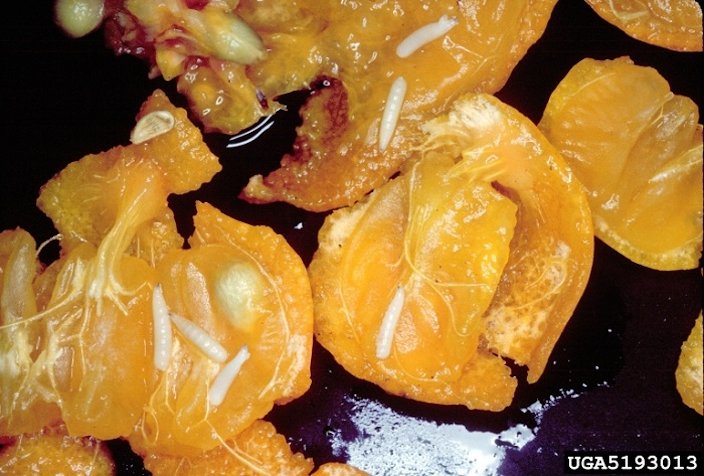
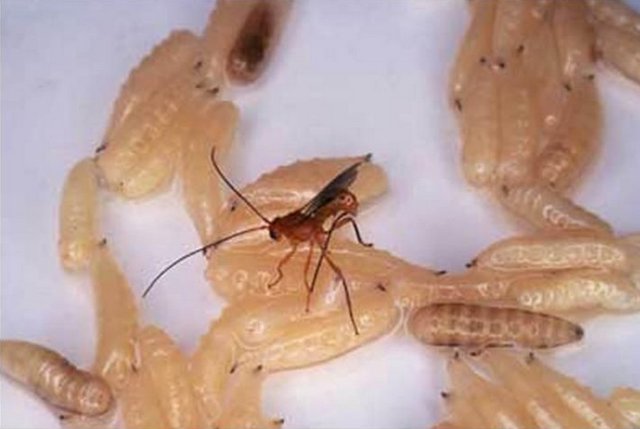
Fig. 2. Caribbean fruit fly A. suspensa Larva(e) Fig. 3. The endoparasitic braconid wasp, Diachasmimorpha longicaudata (Ashmead), parasitizing larvae of the Caribbean fruit fly, A. suspensa (Loew), ovipositing into fly larva in guava Fig. 4. Distribution of the Caribbean fruit fly in Florida Use of D. longicaudata is planned as part of a two-pronged attack on the Caribbean fruit fly involving the release of parasites and sterile Caribbean fruit flies. These tiny wasps attack fruit fies by laying eggs in the fly larvae. When the fly is in the pupal stage, the wasp egg hatches and the larva begins feeding on the fly pupa, killing the fly before it can develop into an adult. Although this classical biological control technique is effective in reducing Caribbean fruit fly populations, it is not an eradication technique. Another biological control method involves the release of large numbers of laboratory-reared sterile flies. This program is known as the Sterile Insect Technique (SIT). Mating between the sterile lab-reared flies and fertile wild flies interrupts the native population because offsprings are not produced. 2 Further Reading Caribbean Fruit Fly, Anastrepha suspensa (Loew), University of Florida pdf A Parasitoid Wasp, Diachasmimorpha longicaudata, University of Florida pdf |
||||||
| Bibliography 1 Crane, Jonathan H., and Caldeira M. Lilia. "Loquat Growing in the Florida Home Landscape." Horticultural Sciences Dept., UF/IFAS Extension, HS5, Original pub. Jan. 1980, Revised Oct. 2005 and Nov. 2016, Reviewed Dec. 2019, June 2023, AskIFAS, edis.ifas.ufl.edu/mg050. Accessed 23 Mar. 2017, 3 Aug. 2020, 3 Apr. 2024. 2 Weems, H. V., et al. "Caribbean Fruit Fly, Anastrepha suspensa (Loew) (Insecta: Diptera: Tephritidae)." Entomology and Nematology Dept., UF/IFAS Extension, EENY-196 (originally published as DPI Entomology Circulars 38, 260), Original pub. Mar. 2001, Revised Mar. 2012, June 2021, and Oct. 2024, Released 21 Apr. 2025, AskIFAS, edis.ifas.ufl.edu/in350. Accessed 23 Apr. 2017, 28 July 2020, 11 Oct. 2025. Photographs Fig. 1 Weston Lotz, Jeffre. "Caribbean Fruit Fly (female)." Division of Plant Industry Archive, Florida Dept. of Agriculture and Consumer Services, United States, 15 May 2007, (CC BY 3.0), Wikimedia Commons, commons.wikimedia.org/wiki/File:Anastrepha_suspensa_5193019.jpg. Accessed 2 Feb. 2014. Fig. 2 "Caribbean fruit fly Anastrepha suspensa (Loew) larvae." Florida Division of Plant Industry, Florida Dept. of Agriculture and Consumer Services, 8 May 2007, Bugwood.org, (CC BY 3.0), www.insectimages.org/browse/detail.cfm?imgnum=5193013. Accessed 2 Feb. 2014. Fig. 3 Lotz, Jeffrey. "The endoparasitic braconid wasp, Diachasmimorpha longicaudata (Ashmead), parasitizing larvae of the Caribbean fruit fly, Anastrepha suspensa (Loew)." Division of Plant Industry, Florida Dept. of Agriculture and Consumer Services, Entomology and Nematology Department, UF/IFAS Extension, AskIFAS, edis.ifas.ufl.edu/publication/IN350. Accessed 10 Apr. 2014. Fig. 4 Steck, G. J., and B. D. Suttonm. "Distribution of the Caribbean fruit fly, Anastrepha suspensa (Loew), in Florida." Division of Plant Industry, Florida Dept. of Agriculture and Consumer Services, Entomology and Nematology Department, UF/IFAS Extension, AskIFAS, edis.ifas.ufl.edu/publication/IN353. Accessed 10 Apr. 2014. Published 7 Oct. 2014 LR. Last update 11 Oct. 2025 LR |
|||||||